Having explored the reasons that pushed Yannick Sabze to pursue his dream of creating video games — The Why — in this article we move to the second stage: the how.
The goal of this article, and of my approach in general, is to understand how a video game gets made, and afterward to understand why African video games remain so marginal despite the arrival of the internet, a multitude of other technologies, and African professionals now capable of developing video games on the world stage. I want to share this process with anyone who’d like to develop video games themselves..
This isn’t about hunting for “success stories” — it’s about walking through the process, the lived experience, and understanding the difficulties encountered, so we can build on them.
GamethSense(GS) : What’s the process for developing a video game?
Yannick Sabze (YS): Three main phases govern video game development: pre-production, production, and post-production. Pre-production is where you define the concept, write the script, design the game mechanics, produce game design documents, plan the project (budget, team, schedule), and often build a prototype. Production is the actual development stage of the game: programming, 3D or 2D modeling, animation, sound integration, level creation, UI/UX (user interface and user experience), and internal testing. Finally, post-production covers debugging, quality assurance (QA) testing, optimization, localization, marketing prep (trailers, demos), publishing to platforms, and post-launch updates or fixes (also called patches), and DLC if planned.
GS: What are the tools necessary to develop a game ?
YS : We essentially need a game engine (video game development software), among which the well-known ones are Unreal Engine, Unity, GameMaker Studio 2, Godot, Phaser, and Construct. For creating and animating 3D assets, we very often turn to Blender or Autodesk 3ds Max. The key is having skilled development professionals on your team to produce quality video games.
GS : Can you give an example of using these tools in developing your own games?
YS : The first video game I developed is a breakout game called Akan.
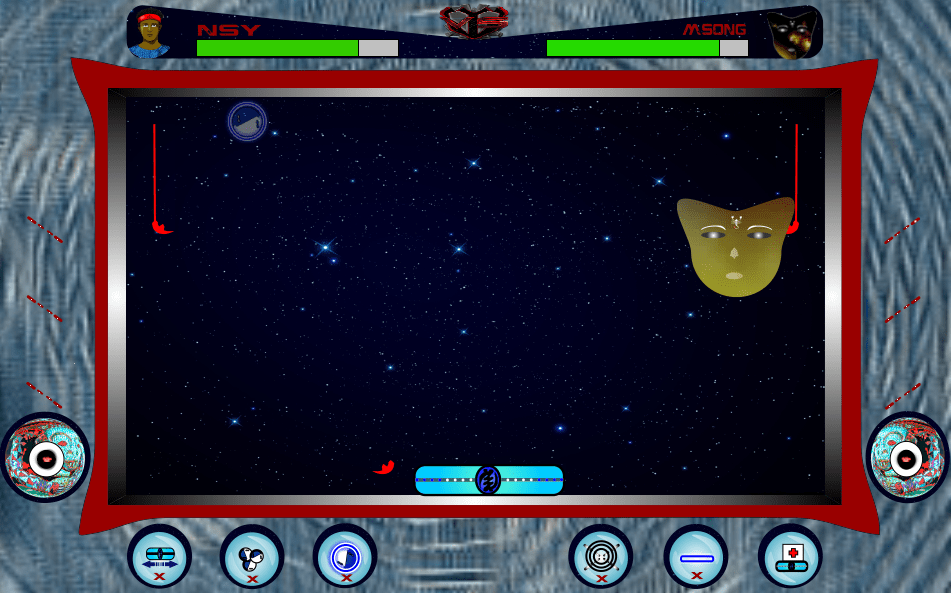
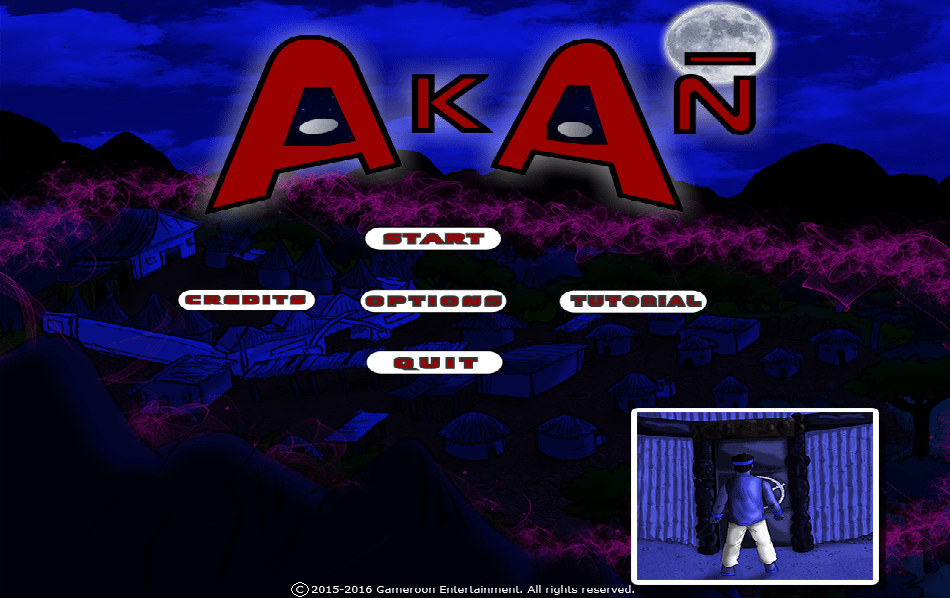
It’s also the first officially released video game to come out of Cameroon. I developed it in GameMaker Studio, combining drag-and-drop with GML, the engine’s proprietary language, for the programming side. I created some of the graphic assets myself using Core Design, and composed the boss-stage music using Mixcraft 7. Other assets were either purchased or sourced for free from specialized sites. I cut my teeth developing this game, whose game mechanic is often used as a basic tutorial in certain development software. I added a story and bosses to give it an original touch — something that, to my knowledge, had never been done for this type of game before. Using GameMaker Studio 1 and later 2, I went on to develop other games, including a match-3 titled Glow Glow, a runner titled CMR2018, and a mini action game titled Attrape le Way, whose main character is Cool Black, a Cameroonian film actor beloved around the world.
I’ve since moved on to the next phase of my projects, marked by a change in the game engine I use for development. Access Code — the project’s code name — is currently in post-production, with its prototype being developed in Unity. Naturally, that meant a learning curve with this new engine, which I worked through via countless online tutorials, culminating in earning the Unity Junior Programmer certificate from Unity. I can’t say too much about Access Code yet, since its gameplay is entirely original — unlike my earlier games, whose mechanics had already been reworked every which way. As an exclusive for The GamethSense, though, I can share a representative mockup of some of the gameplay elements.
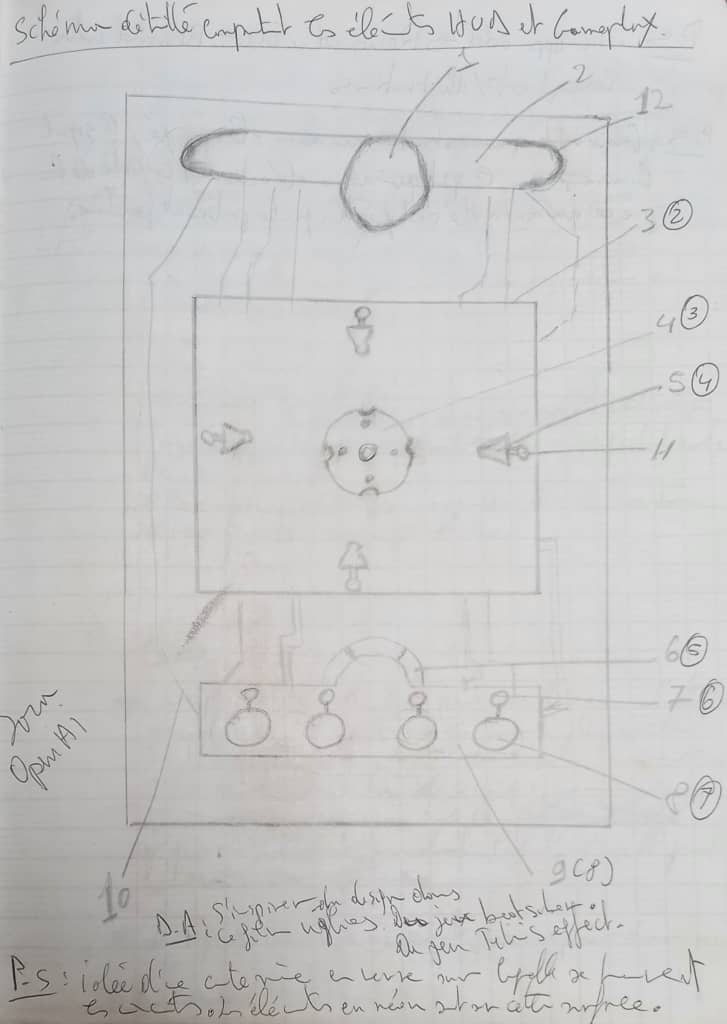
GS :Thank you for the sneak peek! I can’t wait to see this project come to life. This early sketch has now become a commitment on your part to deliver something that will become as popular as — if not more popular than — Tetris was in its day. Thank you also for sharing something important: the creative process. I’m always curious about what happens in the imagination of game creators — how paper, or any other medium, comes to life on a screen. Having been a pioneer of gaming in Cameroon is truly admirable. Now it’s time to move to the next stage.
End of Part II
I want to thank Yannick for sharing his experience, and I hope he continues improving his games and lands on the formula that will boost his popularity and unleash his gift as a storyteller, to give us the games Africans are waiting for: the ones that bring out and sublimate their culture, their realities, and their legends.
Broadly, we now have an overview of the major stages and tools involved in developing a video game. There are tools available for development, for graphics, for music. Beyond the tools, you need the skills — either to acquire them yourself or to recruit qualified people to bring your vision to life. All of this takes resources, effort, equipment, time, and of course, as always, money.
We now know the motivations, and we know how to make a video game and so what? as in the popular expression. This final installment will explore the difficulties Yannick and Gameroon faced in the African context in general, and the Cameroonian context in particular. It will also let us explore possible paths forward to face these challenges and move closer to the emergence of African video games.

 The Game(th) Sense
Leave a comment